Case Study
Bedding Configurator
Sleep Number
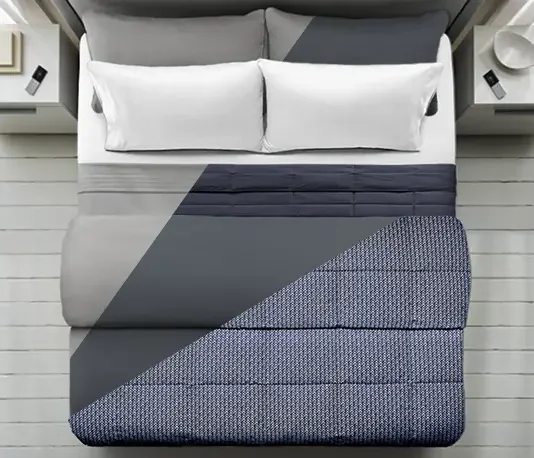
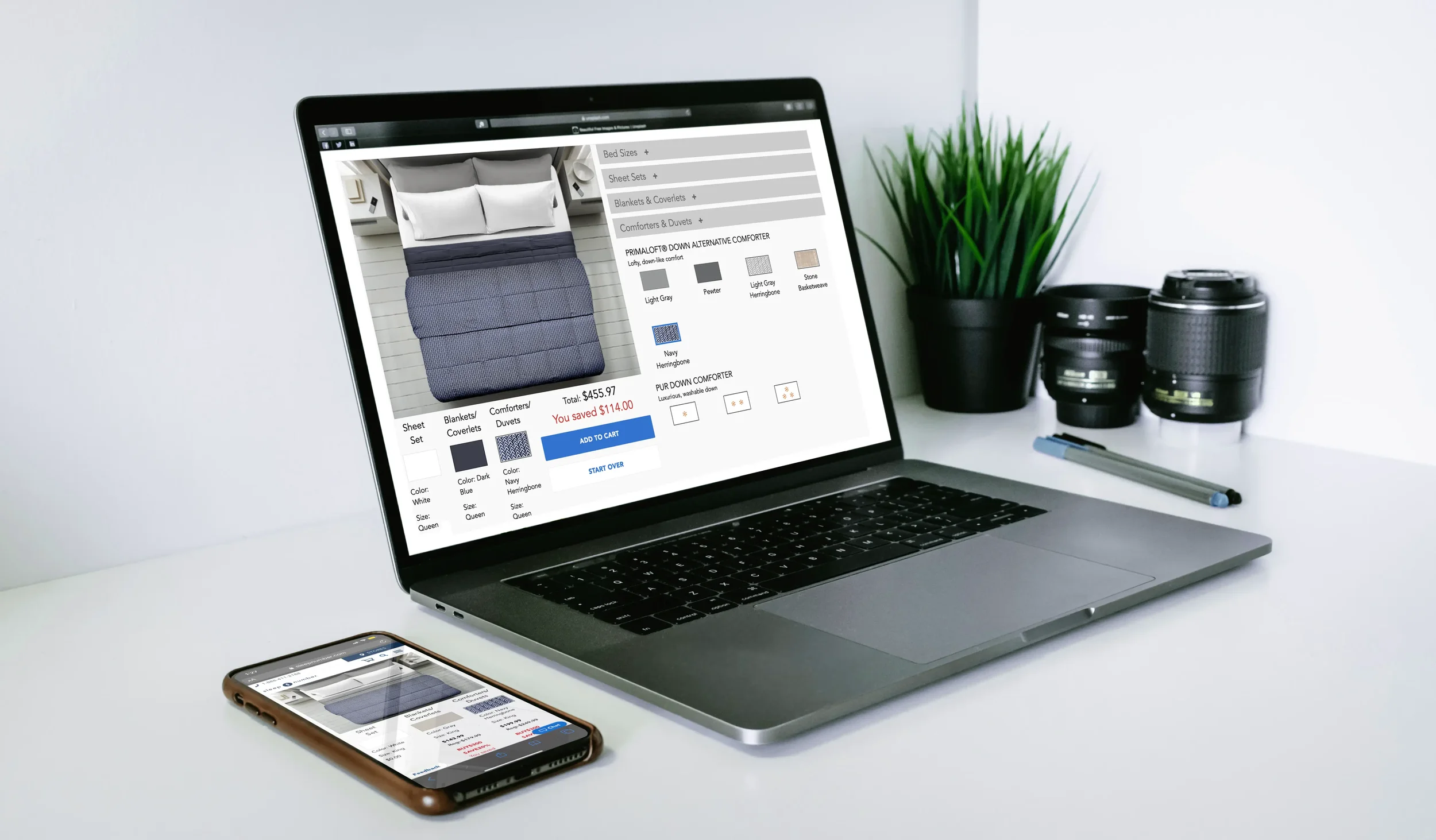
I designed a multi-channel Bedding Configurator for Sleep Number, leveraging a modular UX design system and clean, top-down visuals. This approach allows customers to mix and match bedding styles to build their ideal bedroom look. To ensure this product would remain sustainable, I also established a repeatable photography workflow by shooting every bedding item from a consistent overhead angle so that new products could be added without reshoots or complex post‑production. The result was a scalable, intuitive tool that made bedding selection and the shopping process more visual and enjoyable.
Disciplines & Tools
Experience architecture — structured the end‑to‑end flow for how customers explore, add, and compare bedding items across web, mobile, and in‑store displays.
Interaction design — defined the behaviors for layering, swapping, and previewing bedding items in real time.
Information architecture — organized bedding categories, product states, and configuration steps to reduce cognitive load.
Design system creation — built a modular component system that governed how bedding items render, stack, and update across channels.
Visual systems design — established consistent rules for color, texture, lighting, and product representation to ensure trust and clarity.
Cross‑functional collaboration — partnered with engineering, merchandising, and creative teams to align feasibility, asset requirements, and deployment.
Systems thinking — ensured the configurator could scale as new bedding products, colors, and materials were introduced.
Operational workflow design — defined a sustainable photography and asset‑production workflow to support long‑term maintainability.
Art direction for digital products — directed top‑down product photography to ensure consistent layering, lighting, and compositing.
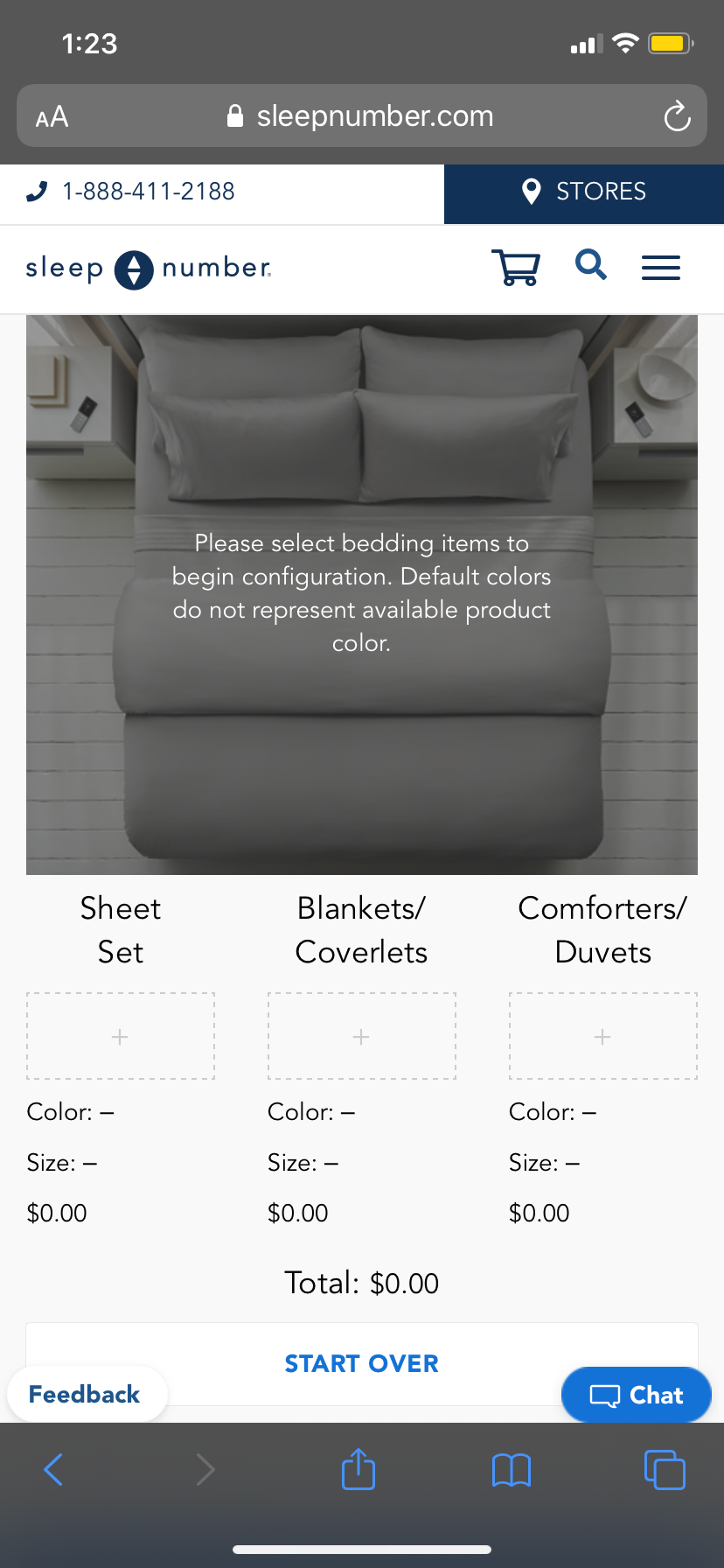
Responsive design — adapted the configurator for in‑store displays, desktop, and mobile without losing clarity or fidelity.
Prototyping — built interactive prototypes to validate layering logic, transitions, and product‑selection flows.
Usability evaluation — tested comprehension, visual clarity, and ease of configuration with customers and store associates.
Accessibility design — ensured color contrast, focus states, and keyboard navigation worked across the configurator.
Challenge
Sleep Number needed a bedding experience that was both inspirational and highly functional, offering a premium, high‑end presentation that helped customers clearly see how different bedding items would look together as a cohesive ensemble that matched their personal taste. The interface also needed to support intuitive interaction design patterns so customers could easily add, remove, and compare items in real time. At the same time, the overall experience had to work seamlessly across web, mobile, and in‑store displays while remaining operationally maintainable for Sleep Number over time. Meeting these needs required a multi‑channel experience architecture that balanced aspirational visual storytelling with the practical demands of a real‑time configuration tool supported by a sustainable photography workflow.
Approach
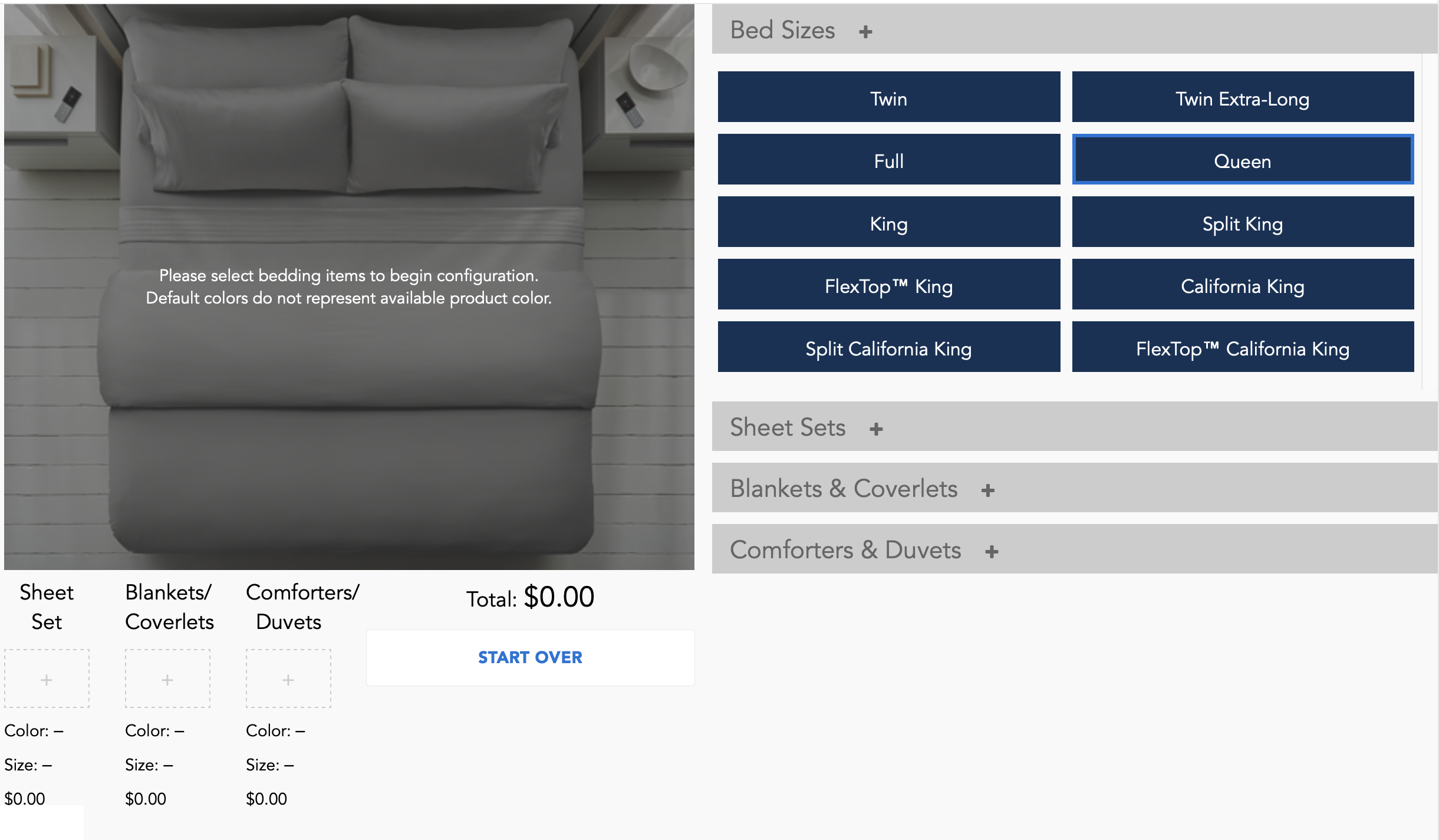
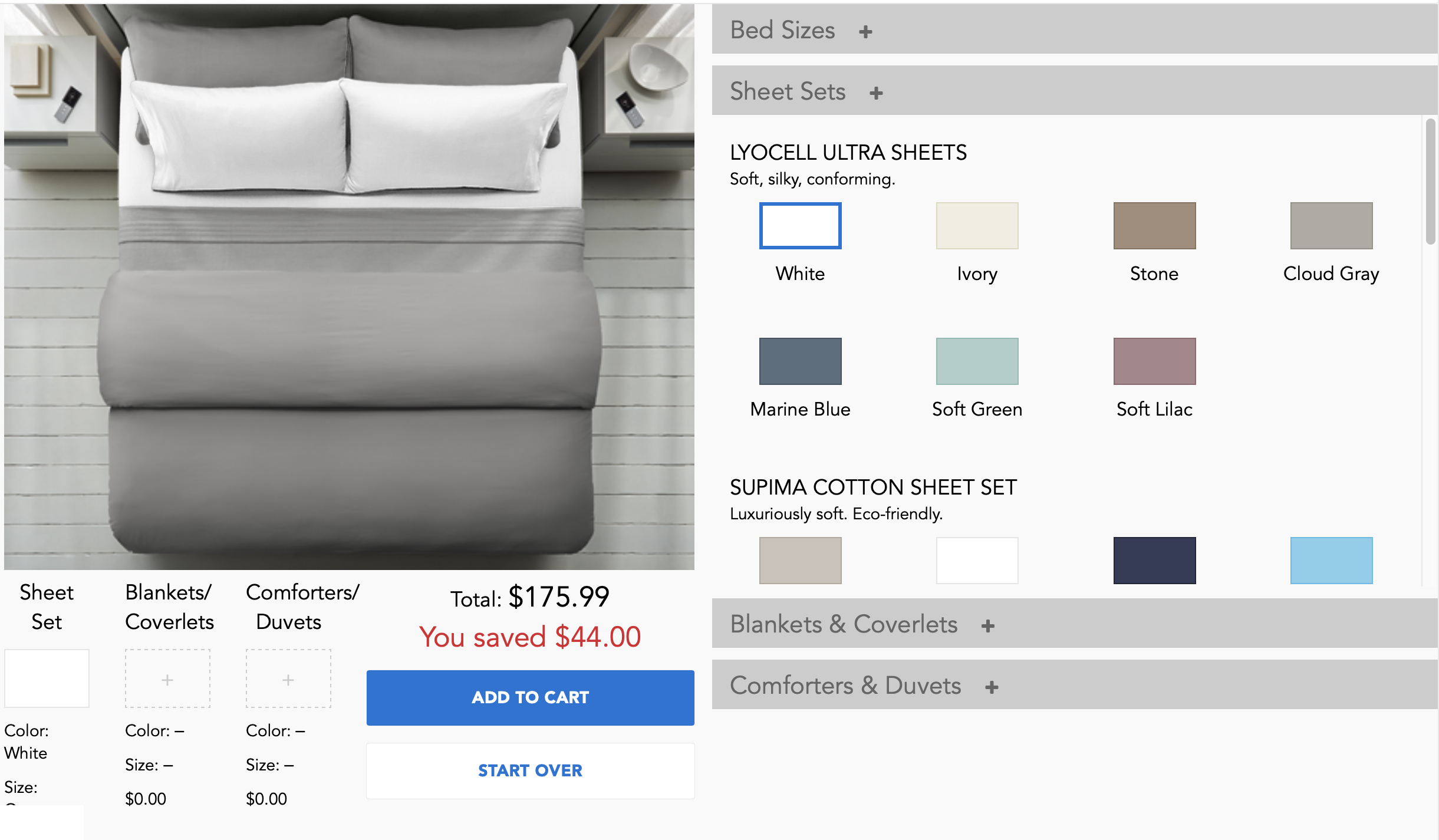
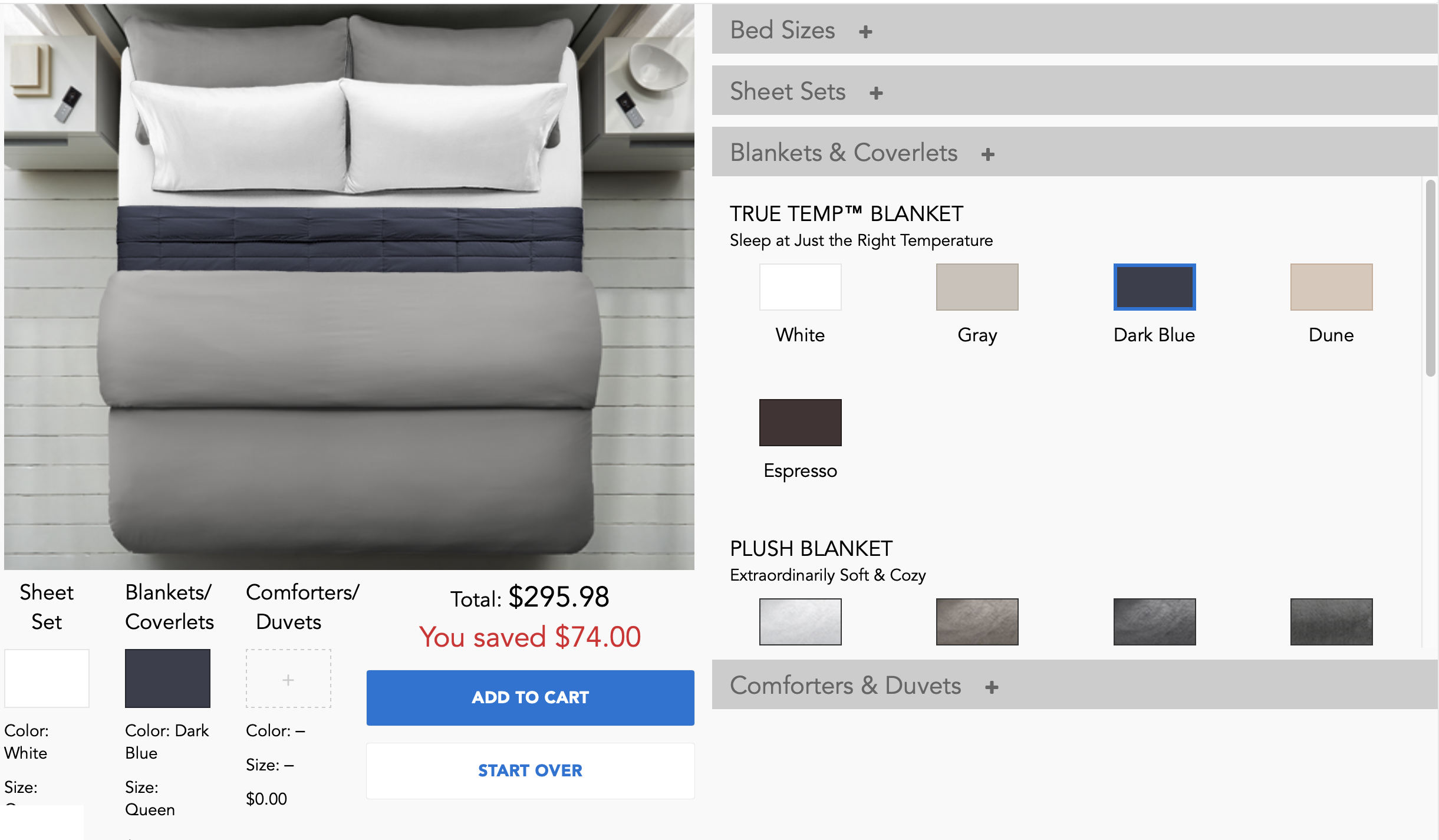
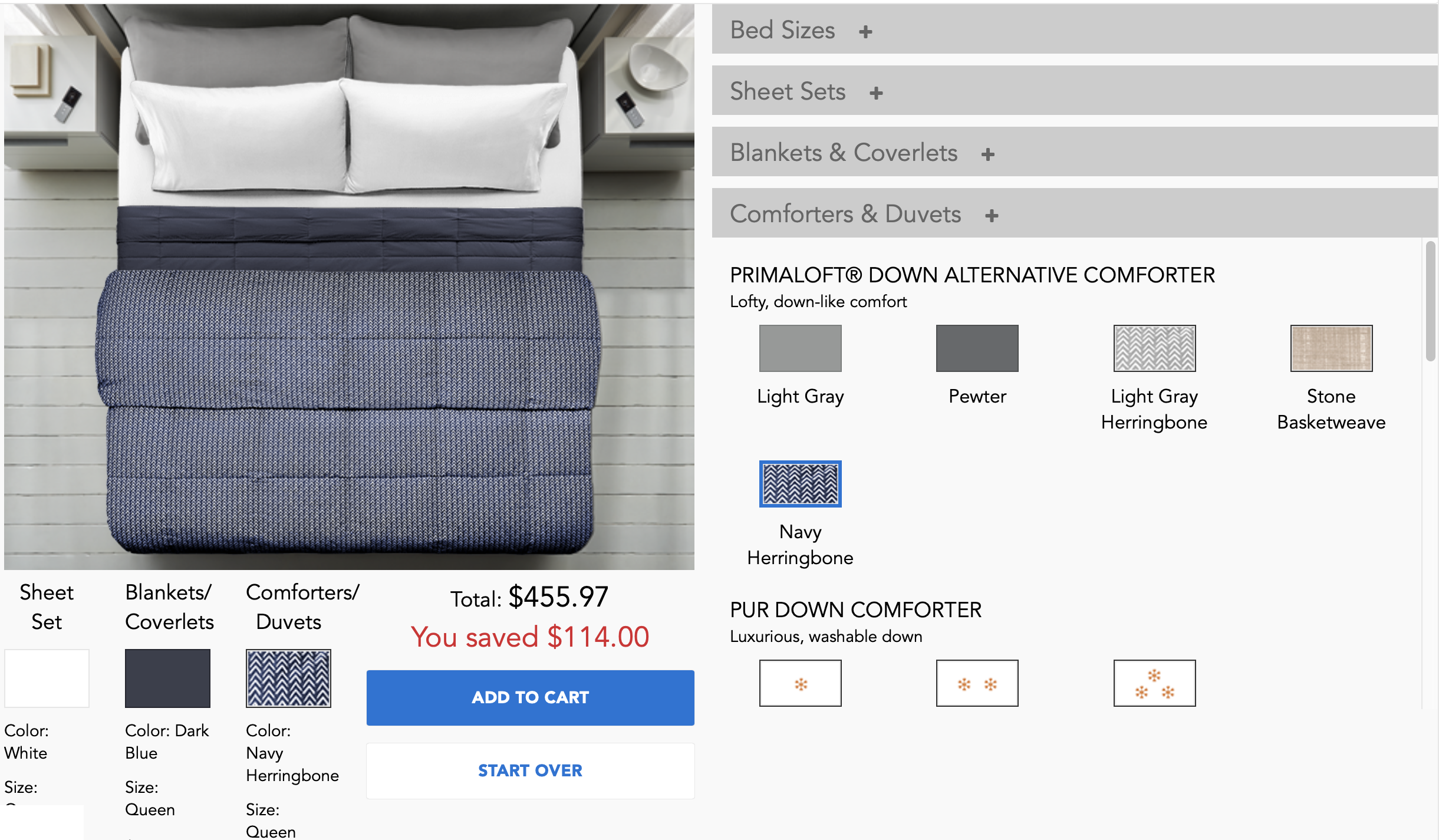
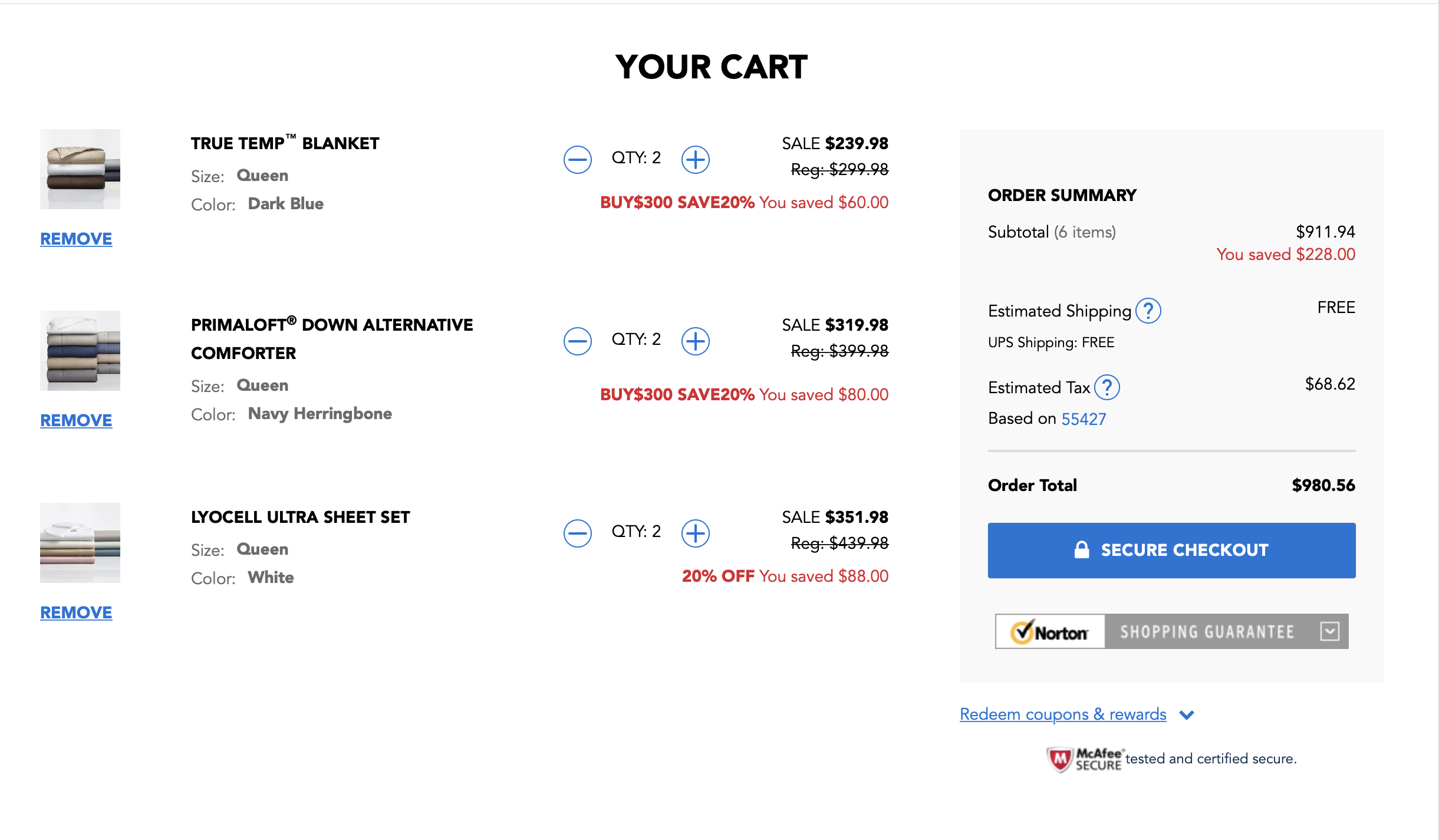
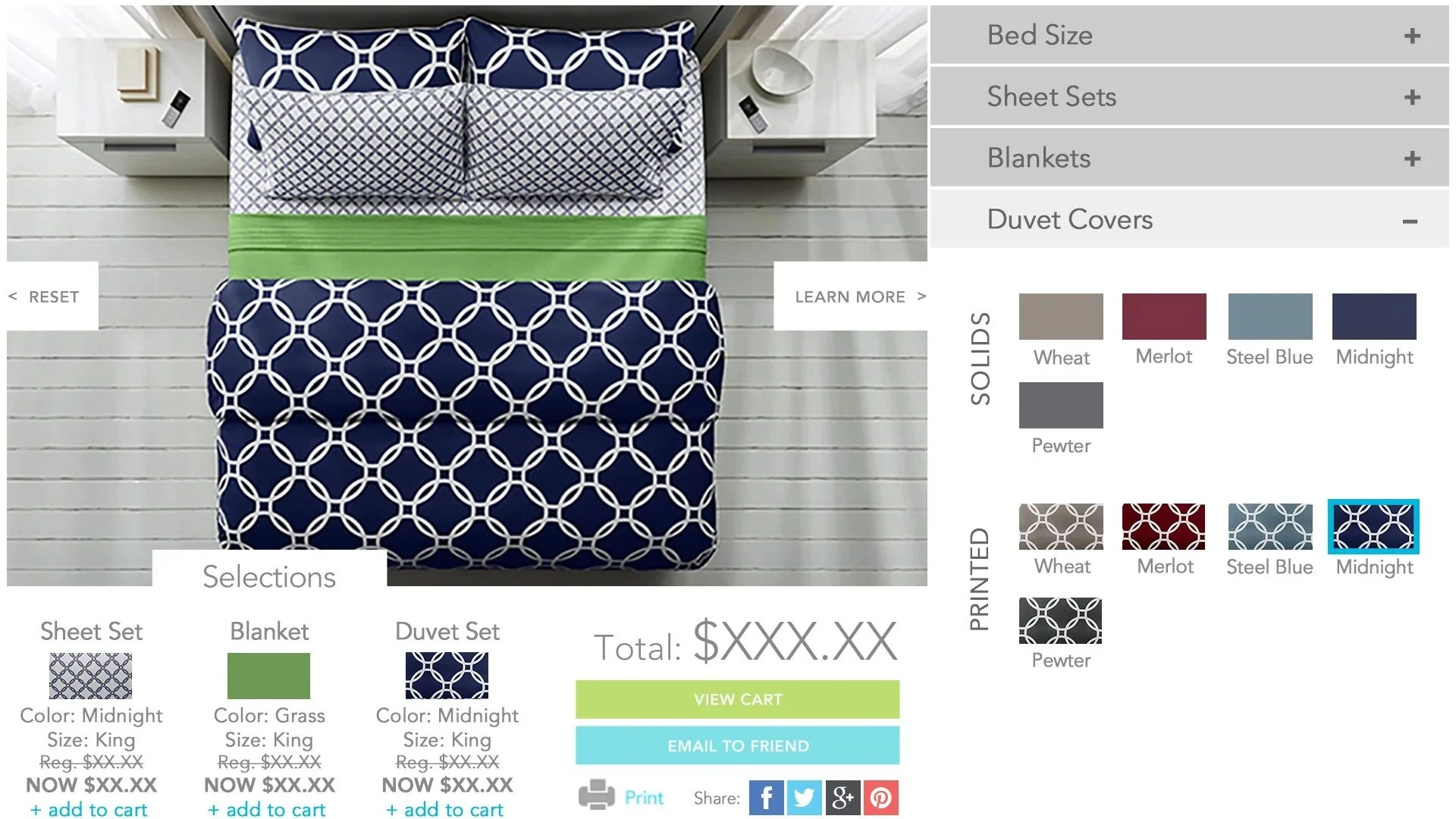
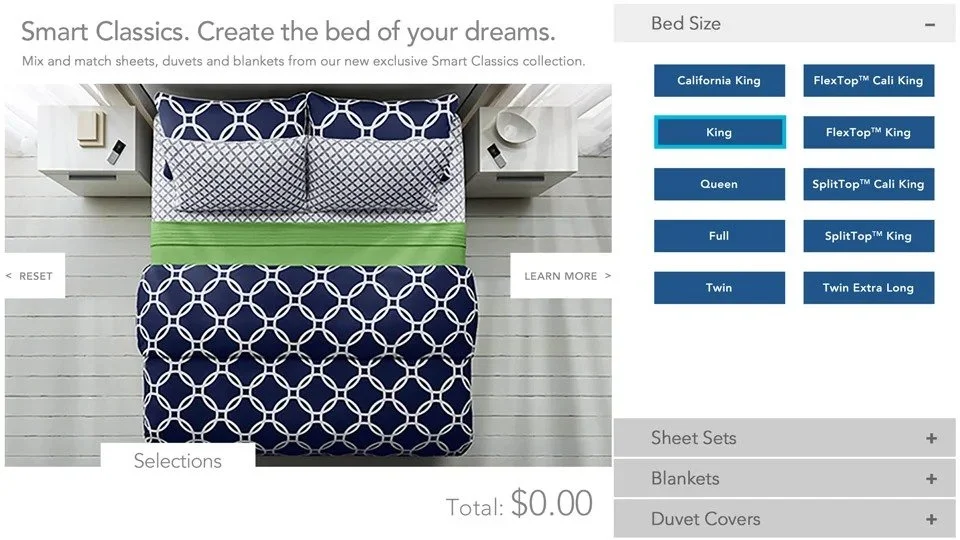
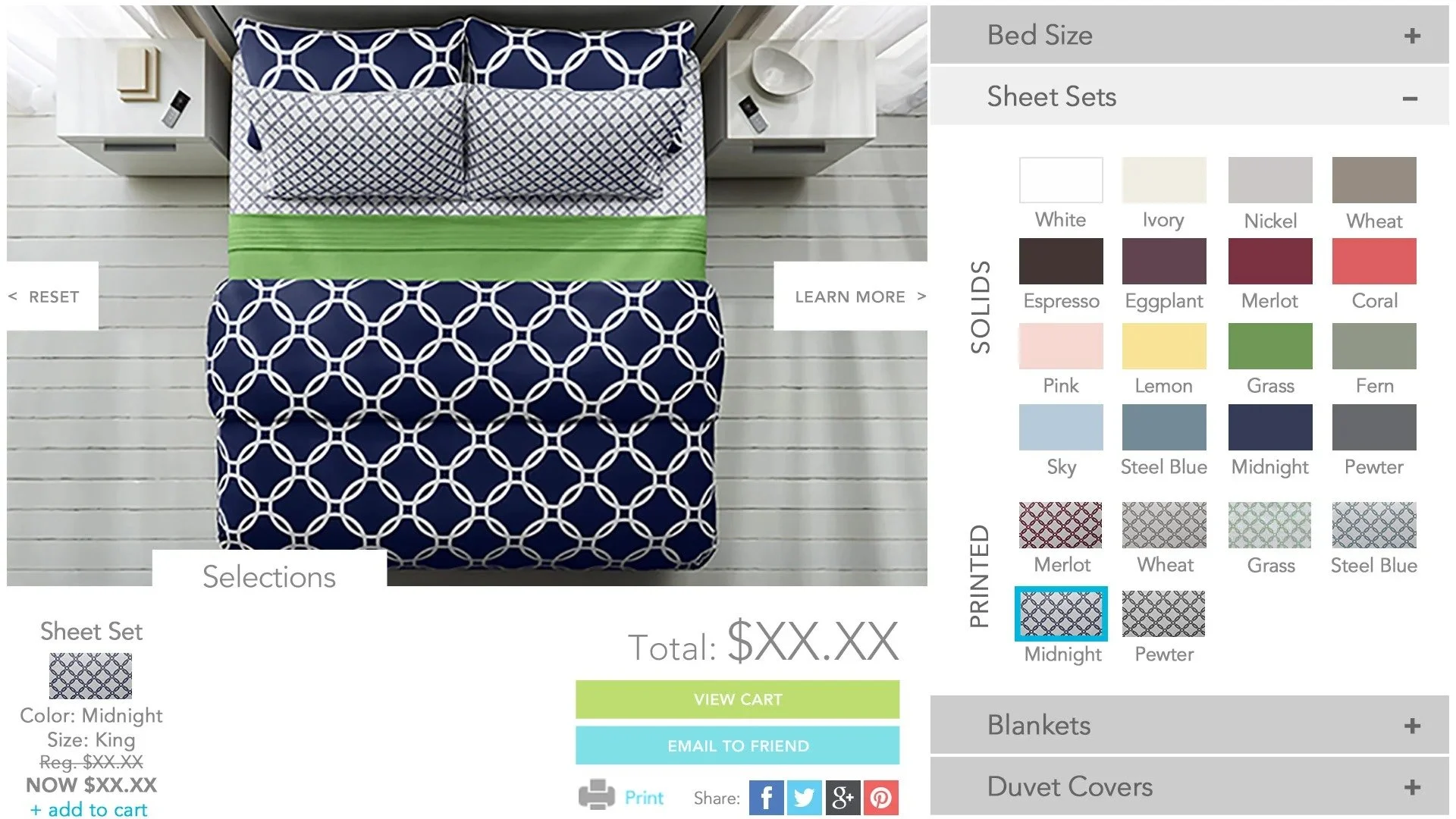
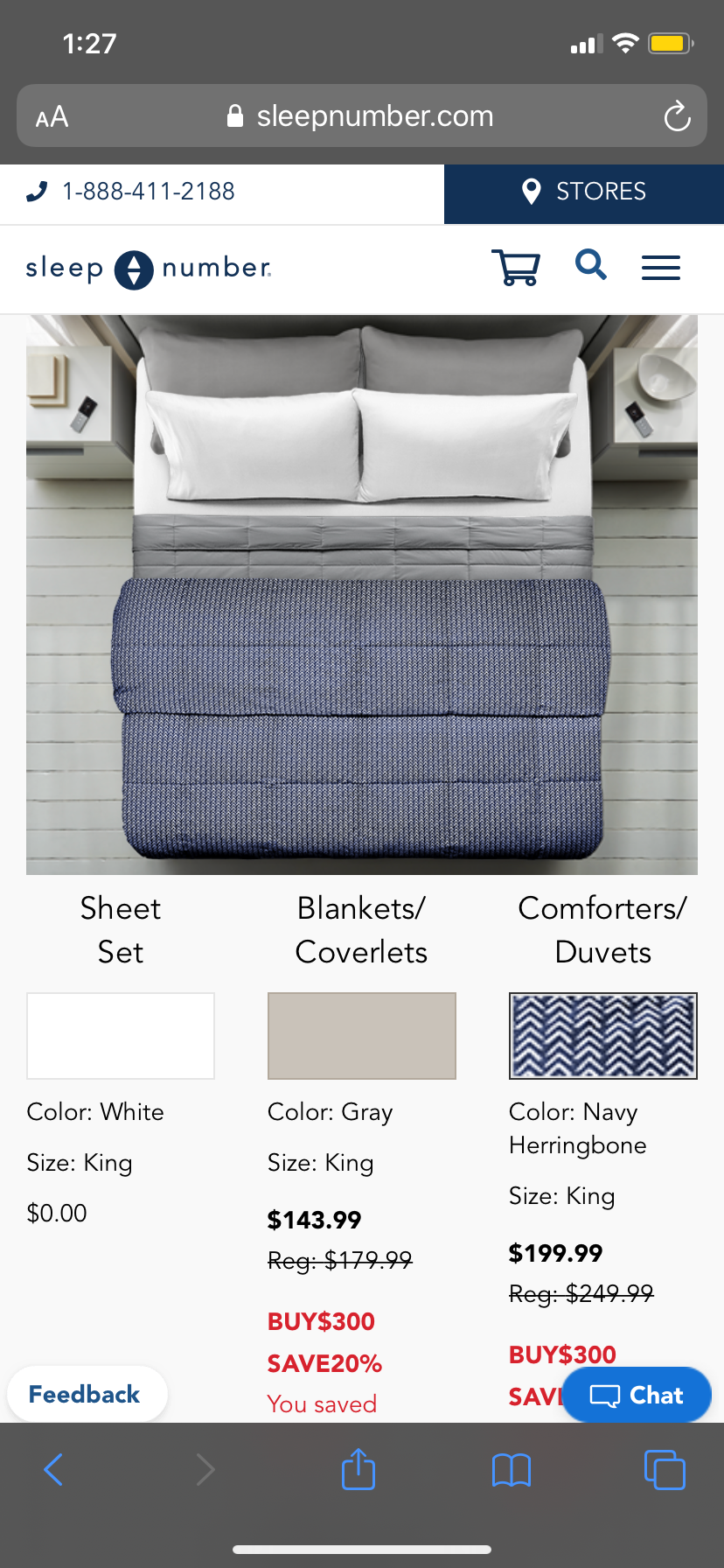
I designed a multi‑channel experience architecture that let customers build their bedding ensemble step‑by‑step through a clean, top‑down visualization system. To make the configurator intuitive, I defined clear interaction design patterns for adding, removing, and comparing items, ensuring every state change felt immediate and easy to understand. I paired this with a modular UX system that governed how bedding layers rendered and behaved consistently across web, mobile, and in‑store displays. In parallel, I established a sustainable photography workflow—directing top‑down product imagery so every item aligned perfectly and could be maintained without ongoing reshoots. Through close cross‑functional collaboration with engineering, merchandising, and our internal creative team, we ensured the configurator was technically feasible, visually pleasing, and operationally scalable.
Interaction Design
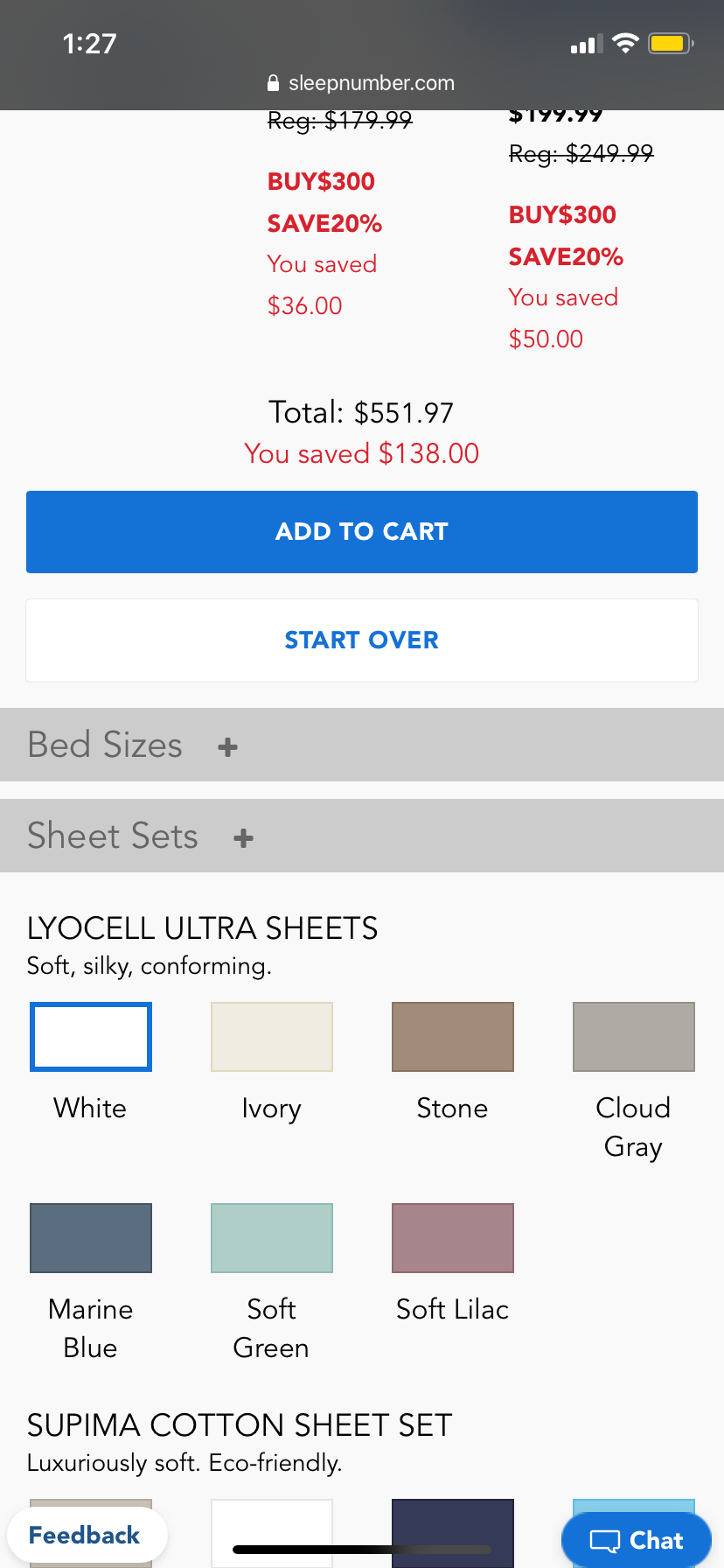
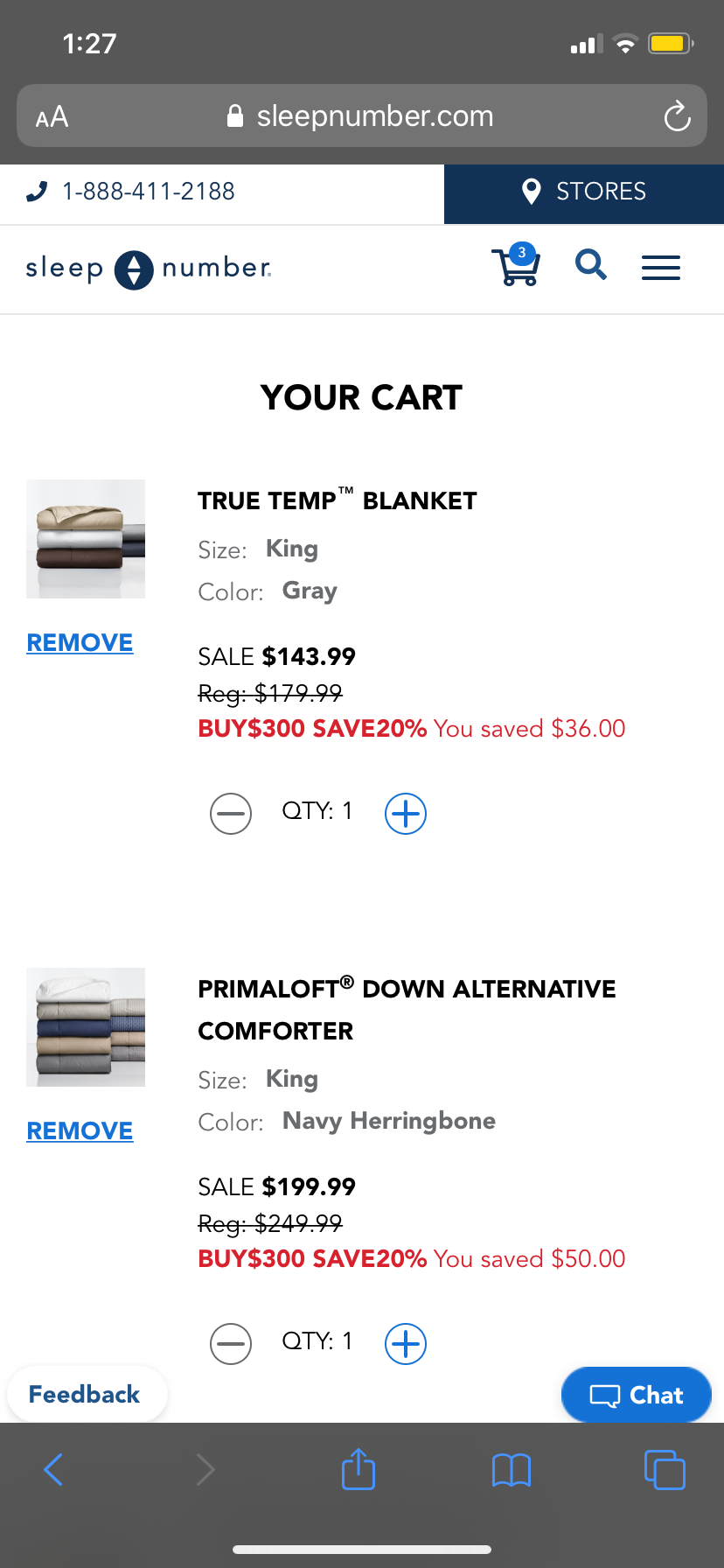
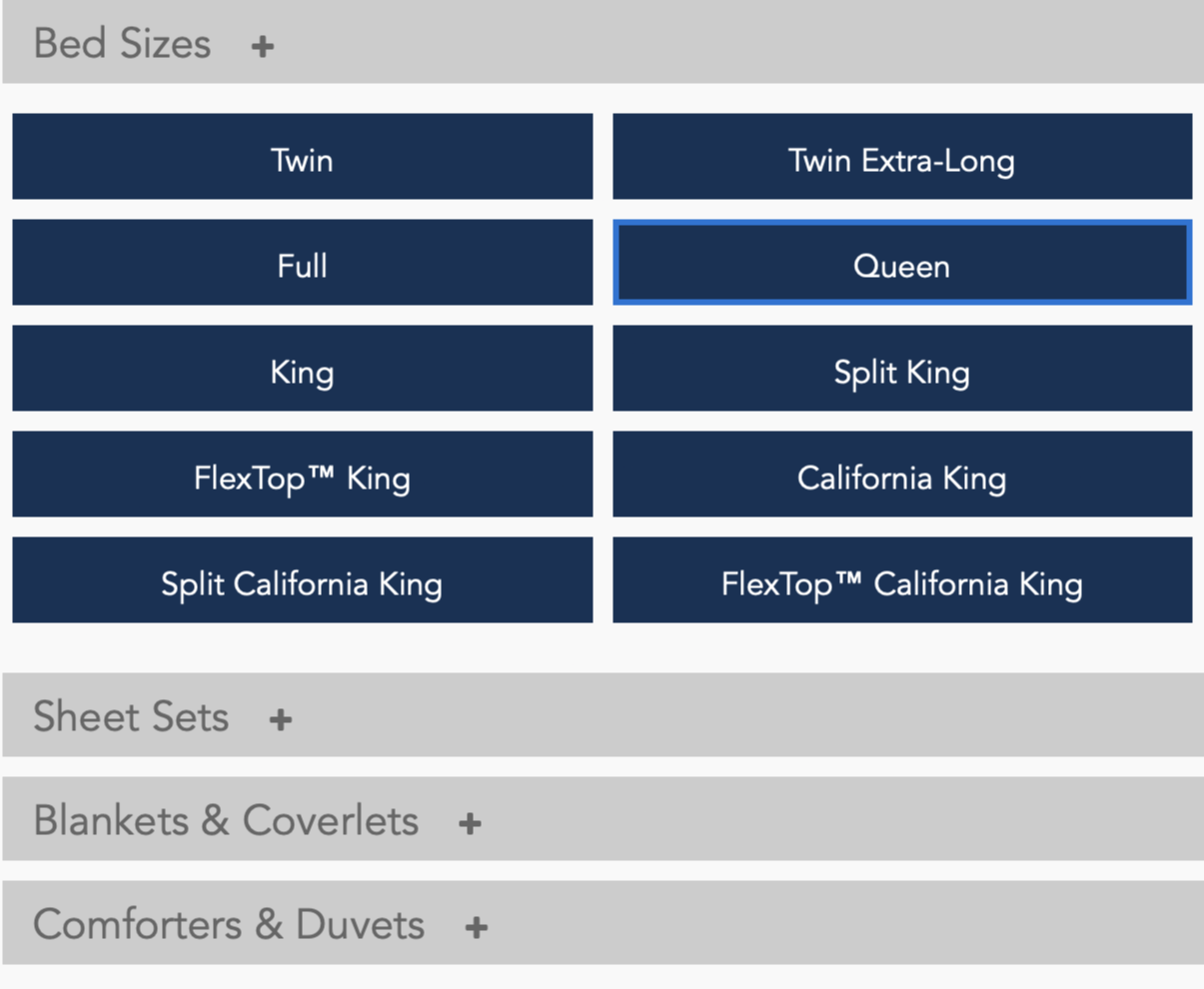
Interaction design: clear add/remove behaviors, real‑time feedback, and predictable state changes
Layering logic: sheets → blankets → comforters rendered in the correct visual order
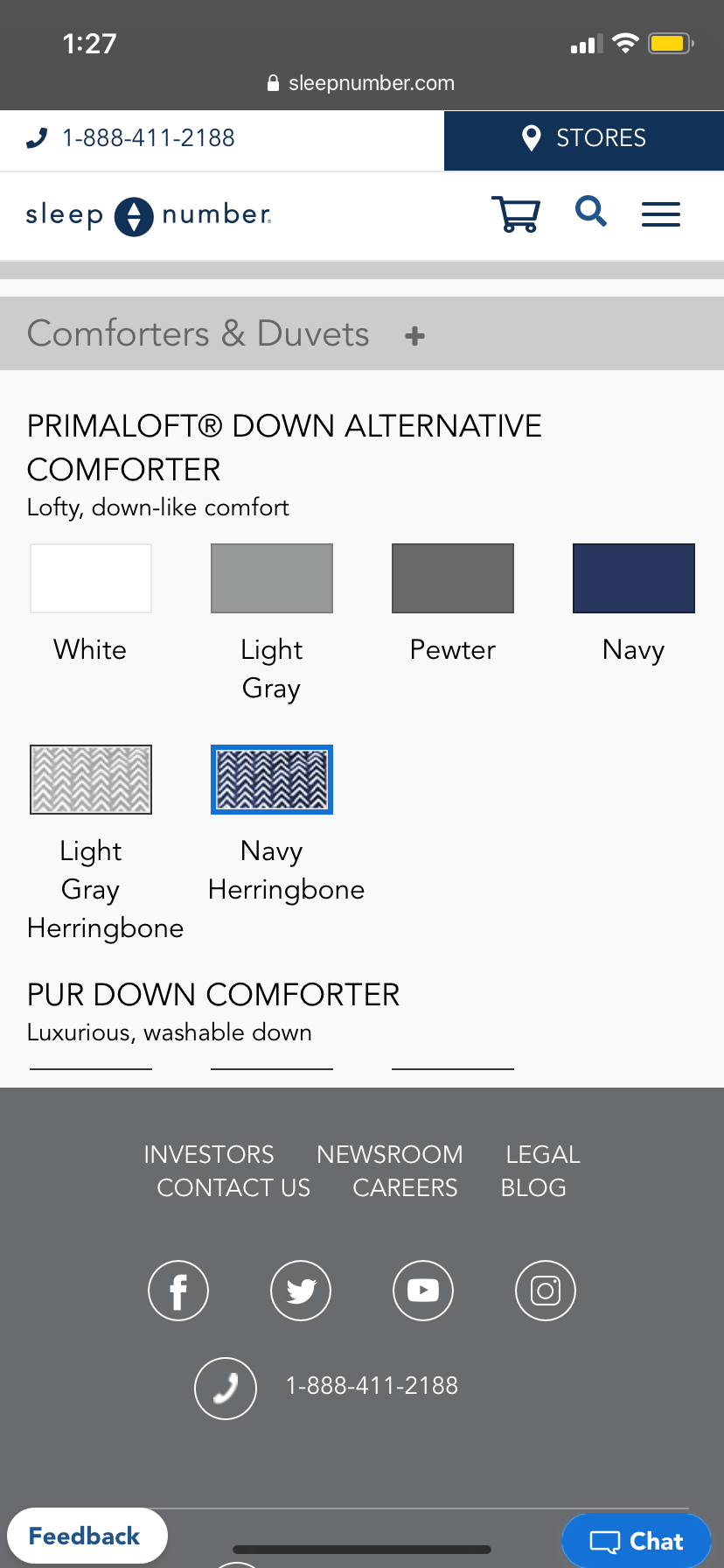
Affordances & clarity: intuitive controls for selecting, swapping, and comparing items
Cross‑channel consistency: interaction patterns adapted for touch, click, and large‑format displays
To make the configurator feel intuitive, I defined a clear interaction model that guided how customers added, removed, and compared bedding items in real time. This included establishing predictable state changes, visual feedback, and a layering logic that kept the experience understandable across web, mobile, and in‑store displays. The result was an interaction system that felt natural, responsive, and satisfying, while supporting both exploration and decision‑making.
Photography System & Asset Architecture
Operational workflow design: sustainable asset creation and long‑term maintainability
Art direction: top‑down photography for perfect alignment and compositing
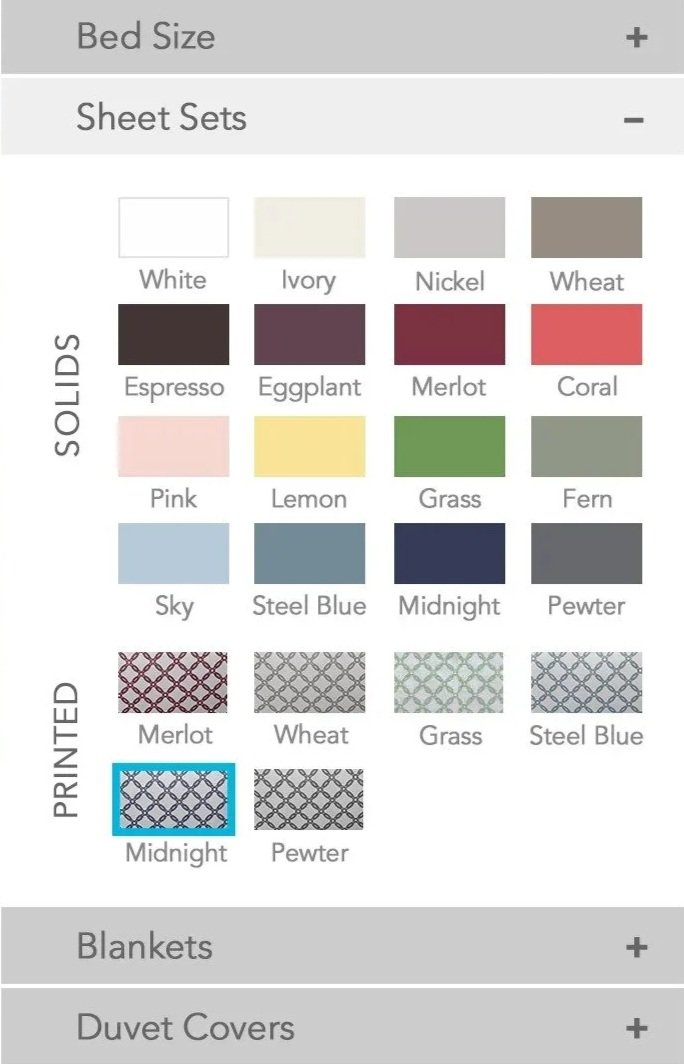
Visual systems: consistent lighting, color accuracy, and texture representation
Scalable asset model: new products added without reshoots or rework
Because the configurator relied heavily on visual accuracy, I established a sustainable photography system that ensured every bedding item aligned perfectly when layered. By directing a top‑down shooting approach and defining strict visual standards, we created an asset pipeline that was both premium and operationally maintainable. This system allowed Sleep Number to introduce new products without costly reshoots, keeping the experience scalable and consistent over time.